Recently, QLD DPI Plant Pathologists surveyed 13 chickpea crops across southeastern Queensland in the Dalby, Chinchilla and Pittsworth regions as part of a GRDC-funded project Seasonal status of pests and diseases delivered to growers (DAQ2407-001RTX).
These surveys play an important role in understanding the current health status of crops, identifying emerging threats, and providing growers and industry with an up-to-date picture of disease risk across the region. Regular surveillance also helps ensure that unusual disease occurrences are detected early, supporting informed management decisions and strengthening the industry’s preparedness for future challenges.
Across the crops inspected, disease incidence was generally low, with no fungal diseases detected during the survey period. The hot and dry weather experienced throughout much of the growing season has been largely unfavourable for the development and spread of many important chickpea diseases. However, many crops exhibited obvious signs of drought stress due to the lack of rainfall across the region.
Most crops showed symptoms consistent with virus infection, although infected plants occurred only sporadically and at very low incidence levels within fields. Chickpea virus symptoms commonly include stunting, yellowing or purple-reddening of plants often paired with bunching and shoot tip necrosis.
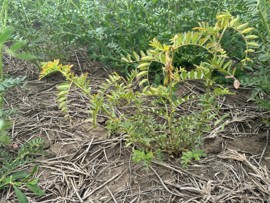
Chickpea showing virus symptoms
As chickpea canopies close, monitor your crops for signs of ascochyta blight and botrytis grey mould.
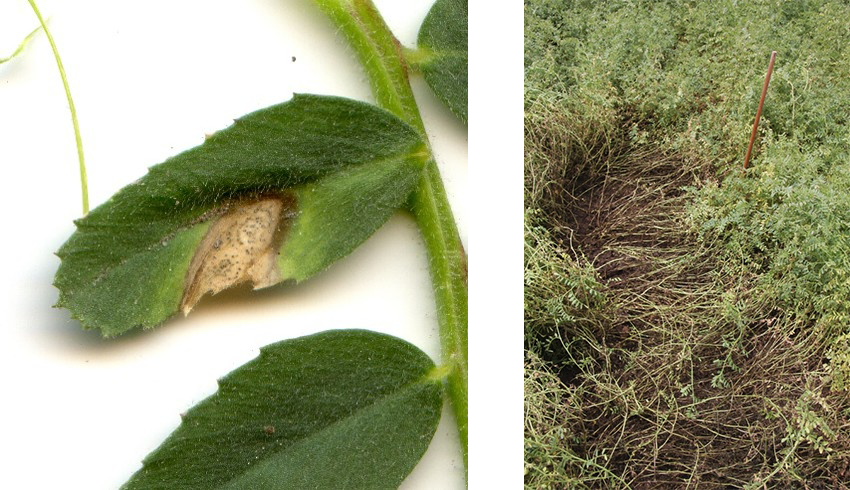
Ascochyta blight (left) causes spots on leaves. Botrytis grey mould (right) causes collapse of the chickpea canopy.
Our pathologists are actively monitoring for changes in pathogenicity and isolate aggressiveness of Ascochyta rabiei (the pathogen that causes aschochyta blight) in the northern region, and are looking for your help in collecting fresh samples of infected plant material. Please contact Lisa Kelly (details below) if you suspect aschochyta in your fields.
If you see disease symptoms in grain crops, please contact plant pathologist Lisa Kelly ([email protected], 0477 747 040) for further information on disease diagnosis and sample collection.