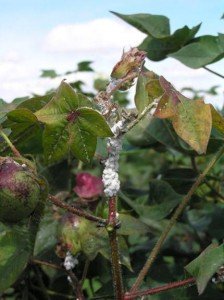
A solenopsis colony
Australia has a large number of native mealybug species in the Psuedococcidae family, including members of the genera Paracoccus, Ferrisia and Pseudococcus. Mealybugs are widespread, but generally prefer warmer conditions. Ants can nurture mealybug colonies, collecting honeydew while keeping predators away.
Broadacre pest species include peanut mealybug (Maconellicoccus hirsutus) and solenopsis mealybug (Phenacoccus solenopsis). Field crop hosts are primarily peanut, cotton, mungbean and sunflower, although mealybugs are also found in a wide range of horticultural crops, garden plants and weed species.
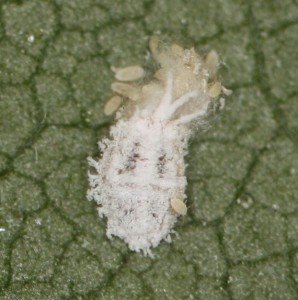
Solenopsis mealybug with young
Mealybug females and the nymphs are most noticeable, growing to about 3mm long. They are oval and covered in a white waxy coating giving them a ‘mealy’ appearance. Only the males have a pupal stage, emerging as small aphid-like winged insects.
Females lay egg sacs containing hundreds of eggs. Many generations can occur within a year. Young nymphs (called ‘crawlers’) are highly mobile.
Colonies of mealybug form highly visible white masses, congregating on terminals and in sheltered areas, such as under cotton boll bracts and on peanut kernels (infested kernels may collapse and turn black). The bugs pierce and suck on plant tissue. Damage is often worse in stressed plants. Symptoms include:
- reduced plant vigour and shortened season
- stunting
- distorted shoots/leaves
- reduction in flowers/seeds/fruit
- honeydew contamination and sooty mould
- ‘hot spots’ of dead plants.
Mealybugs can affect any plant stage but can be difficult to detect until colonies are well advanced. Infestations are often found close to paddock edges, radiating out from an infested volunteer plant or weed, or concentrated in poorly drained areas. Peanut mealybug colonies are found at the base of peanut plants on the taproot and pods. In cotton, early infestations of solenopsis mealybug cause ‘hotspots’ of dead plants.
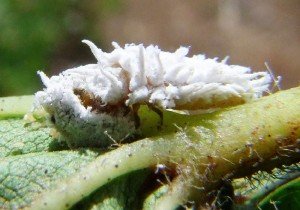
Cryptolaemus ladybird larva
Natural enemies include the mealybug ladybird, other ladybirds and predatory beetles, lacewing larvae, parasitoid wasps. Natural enemies have the potential to significantly impact mealybug populations.
Practice good farm management and hygiene. Prevent mealybugs moving into farms and fields that are currently mealybug-free by restricting movement of people and machinery in infested areas, regularly washing clothing and equipment that may transmit crawlers, and keeping fields and non-crop areas free of alternative host plants.
Mealybugs are very difficult to control with chemicals as their waxy covering repels sprays and they hide in sheltered areas of the plant, and can hibernate over winter on host plants or in soil. They also have resistance to several pesticide groups, and most pesticides that are toxic enough to affect mealybugs will also impact on beneficial populations.
Further information
- Mealybugs—Bugs for bugs
- Registered chemicals database—Australian Pesticides and Veterinary Medicines Authority (APVMA)
- Green lacewing larva eating mealybug (video)—The Beatsheet
- Solenopsis mealybug in cotton (video)—CottonInfo
- What to do if you find a mealybug hotspot (video)—CottonInfo