The black field earwig (Nala lividipes) is widespread within Australia and the most common earwig pest in the northern grain region. While normally feeding on decaying stubble in cultivation, it will also eat newly sown and germinating seed and the roots of crops, resulting in poor establishment. Feeding on secondary roots may cause the plants to fall over as they get larger.
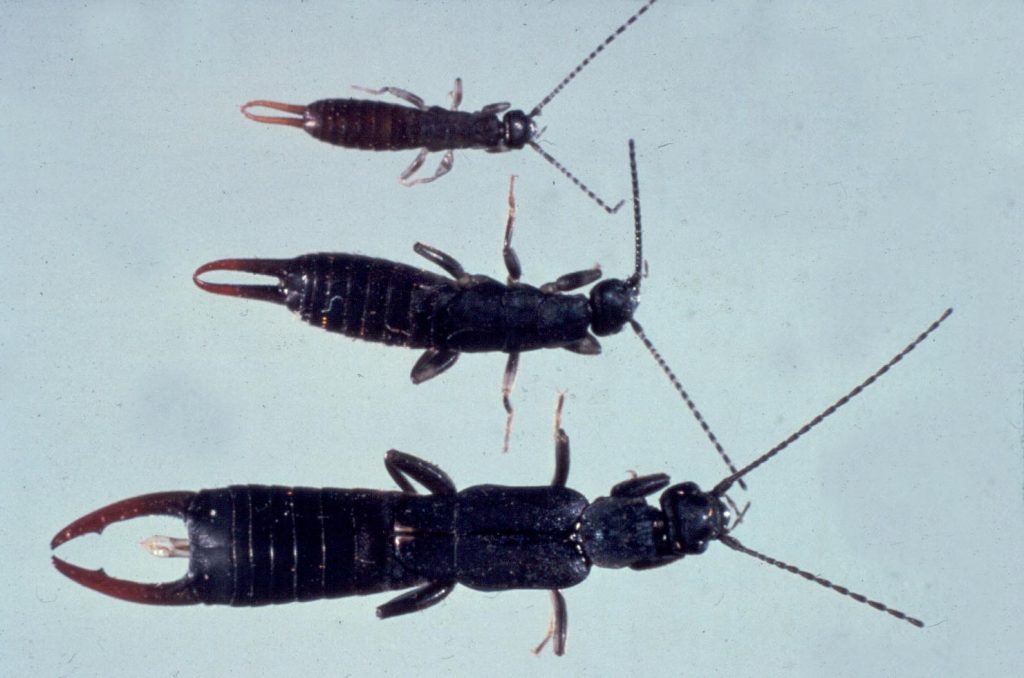
Black field earwigs
Wheat, sorghum, maize and sunflowers are the preferred hosts, but seedlings of most field crops are susceptible. All stages (adults and immatures) are present during warmer months.
Female black field earwigs lay eggs in a burrow in the soil and remain to care for the eggs and nymphs. Eggs hatch in 6-7 days at 29°C, and development through the five nymphal instars takes about seven weeks in clay soils, and longer in sandy soils.

Black field earwig nymph (6 mm)
Adults are 15 mm long, shiny black with a flattened body and a pair of curved pincers at the end of the body. Nymphs resemble adults but are wingless and paler.
Use germinating seed baits or digging and sieving to detect adults and nymphs prior to planting. Monitor crops after planting until establishment.
Control if more than 50 earwigs are present in 20 germinating seed baits or if one earwig is found in 20 spade samples.
Grain baits containing insecticide applied at sowing offer best protection. Insecticide seed dressings also provide some protection, but in-furrow sprays are not effective in protecting against dense populations. No chemical options are available post-planting.
The black field earwig is mainly a pest in areas having heavy, black soils. Earwigs prefer cultivated soils rather than undisturbed soil (zero till). Use press wheels at sowing, set at 2-4 kg per cm width after planting rain, or 4-8 kg per cm in dry soil.
Also present in the northern grains region is the common brown earwig (Labidura truncata), which grows to a larger size (24 mm) and is lighter in colour than the black field earwig. The brown earwigs is a predator of ground-dwelling insects and lepidopteran pupae it finds in the soil.