Cutworm
Several species of cutworm attack a wide range of crops in Queensland. Species include Agrostis munda (brown cutworm), A. infusa (Bogong moth), A. ipsilon (black cutworm) and A. prophyricollis (variable cutworm). The ‘cutworm’ name is derived from the larval habit of severing the stems of young seedlings at or near ground level, causing plant collapse. They can attack most field crops, particularly during the seedling and early vegetative stages, but although widespread their impact is usually minor and irregular.
The brownish-black moths prefer to lay their eggs in soil amongst light vegetation (e.g. a weedy fallow) or in bare areas. Under favourable conditions, egg-lay to adult emergence is around 8-11 weeks, depending on the species.
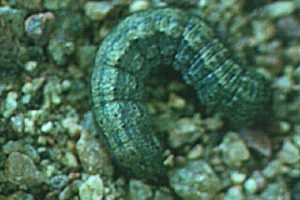
Th usually darkish larvae look plump and grow up to 50 mm long. They are mostly hairless but often have longitudinal lines and/or dark spots. Larvae curl up and remain still if picked up.
Young caterpillars climb plants and skeletonise the leaves or eat small holes. Older larvae may also climb to browse or cut off leaves, but commonly cut through stems at ground level and feed on the top growth of felled plants. Caterpillars that are almost fully grown often remain underground and chew into plants at or below ground level. They usually feed in the late afternoon or at night. By day they hide under debris or in the soil. Mature larvae pupate in the soil.
Inspect crop for damage twice weekly in the seedling and early vegetative stages.
Cutworms are attacked by a number of predators, parasites and diseases. When sampling, look for evidence of natural enemy activity.
Chemical control may be warranted when there is a rapidly increasing area or proportion of crop damage. The whole crop may not need to be sprayed if distribution is patchy; spot spraying may suffice.