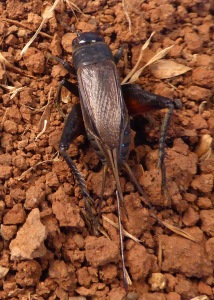
 Adult and nymph black field crickets (Teleogryllus commodus) feed on the leaves and stems of seedlings and may reduce a stand to the extent that replanting is necessary. They may also damage cotton when present in plague numbers.
Widespread in Australia, they are common in cracking soils, with crops in heavier soils at most risk. Field crickets will eat many field crops, including most pulses. Crops can be attacked at any stage, although most damage is caused by crickets already in the area at planting or by adults flying into crops.
Significant damage may be caused by adults and nymphs feeding on leaves, stems and pods. When black field crickets are present in plague numbers, seedling crops can be thinned to the point where replanting is necessary. At podding, adults chew into pods to reach the seeds.
Both adults and immatures shelter during the day in cracks in the soil or under trash. They come out at night and feed on weeds, grasses or crops. In sunflower, the cricket feeds on the seedlings, on the back of the flower heads and on the maturing seeds on the face of the flower.
Listen to the sound of a black field cricket.
Adults are up to 30mm long, winged, black or brown and have the head and mouthparts inclined downwards. The hindlegs are large and modified for jumping like grasshoppers. Nymphs are similar in shape but are smaller, paler and wingless. Small nymphs can have a white band across their back.
Crickets feed at night, so inspect crops at dusk or monitor with light traps when they are most active. Take action if significant cricket populations are present.
Field crickets are controlled using insecticide-treated cracked-grain baits.
Weedy cultivation prior to planting may encourage crickets. Natural control agents appear to have little effect on damaging populations.