
With pulse and grain crops now established across Queensland, growers and agronomists are encouraged to keep an eye out for virus symptoms and submit samples for testing.
Free virus testing available
Virus testing is currently available at no cost to Queensland grain and pulse growers through the GRDC-funded project Effective virus management in grains and pulse crops. Submissions from the field help improve our understanding of virus distribution and support the development of effective diagnostics and management strategies for Queensland.
Chickpeas, faba bean and other pulse crops
Last season, a significant level of alfalfa mosaic virus (AMV), along with several other viruses, were detected in chickpea crops across southern Queensland.
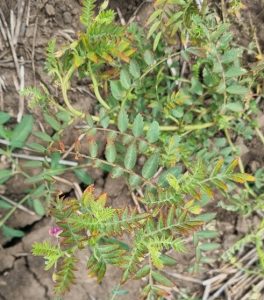
Chickpea with AMV
In chickpeas, be on the lookout for symptoms such as:
- Shoot tip necrosis
- Reddening of leaf edges
- Purple-red leaf discolouration
- Pale or chlorotic leaves
- Stunting or poor plant growth
In other pulse crops such as faba bean, look out for:
- Mild and severe leaf mottling
- Shoot tip necrosis
- Stunting
For more information, see the Beatsheet article: Alfalfa mosaic and other viruses detected in Darling Downs chickpeas.
Grain crops
Virus pressure in grain crops was generally low across Queensland last season, although barley virus G (BVG) was detected in several barley crops on the Darling Downs.
This year, reports from the southern grains region have indicated increased incidence of yellow dwarf viruses (YDVs) in cereal crops.
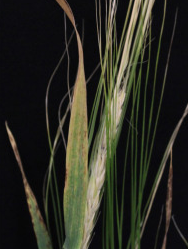
Example of BVG symptoms
In wheat, barley and oats, watch for:
- Yellowing leaves
- Yellow discolouration beginning at leaf tips
- Red or purple discolouration in some varieties
- Stunting and reduced vigour
- Patchy areas of affected plants
For more information, see the Beat sheet article: Barley virus G (BVG) found in barley crops across the Darling Downs.
Sample collection tips
- Send at least one whole leaf from plants showing symptoms.
- If aphids are present, collect live aphids attached to the leaf sample or place them in a sealed container or bag.
- Include paddock location, crop type, crop growth stage and contact details.
Questions or sample submissions?
If you’re seeing unusual symptoms in grain or pulse crops, or would like to discuss virus testing options, please contact:
Dr Fiona Filardo
Senior Plant Pathologist
Queensland Department of Primary Industries
📞 (07) 3708 8449
✉️ [email protected]
For information about submitting samples of fungal or bacterial diseases in Queensland, see the Beatsheet’s Submitting samples for diagnostics page.
New South Wales
NSW pulse and canola growers can have their crops tested for the presence of virus by sending samples to the Tamworth Agricultural Institute. Contact Jule George (0419 143 811, [email protected]) or Joop van Leur (0427 928 018, [email protected]) for sampling and mailing instructions.
For further information about disease testing in NSW, contact NSW DPIRD pathologists:
- Joop van Leur 📞0427 928 018 ✉️ [email protected]
- Solomon Maina 📞0474 252 411 ✉️[email protected]