Seed isn’t just planting material. It can be a disease management decision.
Researchers in the Centre for Crop Health at the University of Southern Queensland have been looking at barley seed from Queensland paddocks, and the results are a real eye‑opener. The latest diagnostics show that barley seed can carry net blotch pathogens, including fungicide‑resistant strains, meaning resistance can hitch a ride into the next crop before plants even emerge.
Net blotch continues to be a major challenge for barley growers in Queensland, and with more reports of fungicides not performing as expected, it is important to investigate how fungicide resistance might be spreading.
The project tested 16 barley seedlots, primarily sourced from grower fields. Net blotch pathogen DNA was detected on 13 of the seedlots, which matched the disease expression in crops. It’s a clear indication that seed source matters when managing net blotch risk.
The investigation then went a little deeper, and searched for DNA markers associated with fungicide resistance, an emerging issue for net blotch in Queensland. Molecular tests picked up reduced sensitivity types linked to the fungicides growers rely on most, such as DMIs (FRAC Group 3) and SHDIs (FRAC Group 7). This lined up with grower reports of fungicides not performing as well in certain fields.
The research team also planted one of the high-risk seed lots and watched the disease emerge on the seedlings. The same reduced fungicide sensitivity types found on the seed showed up in the leaf lesions. In other words: fungicide resistant net blotch was moving from the seed into germinating seedlings.
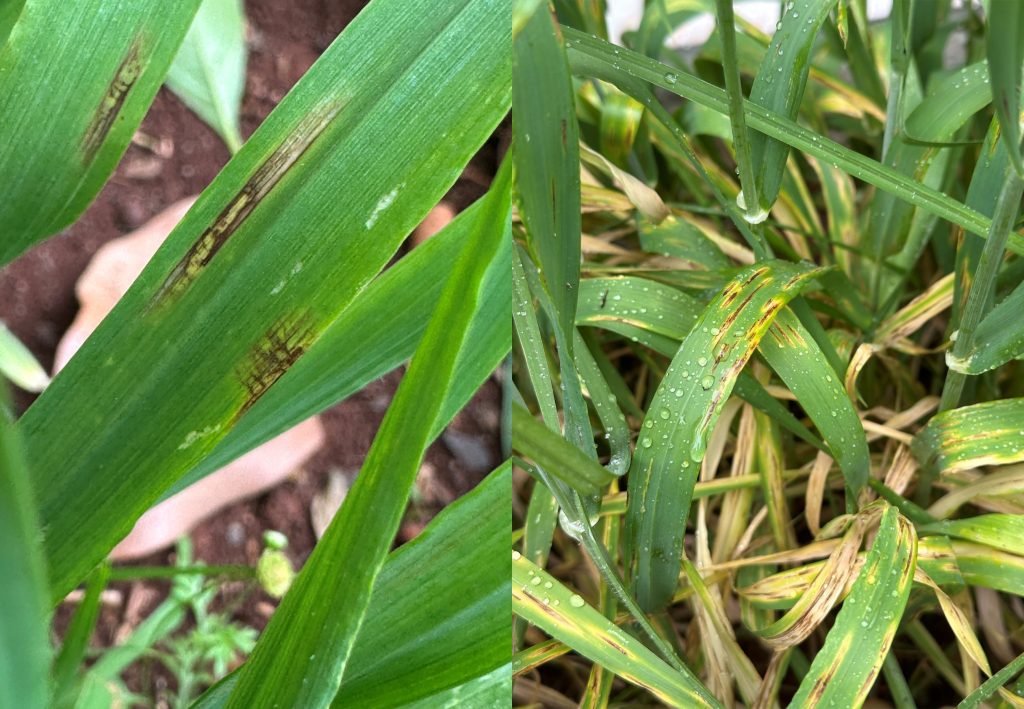
Net form net blotch lesions on barley plants grown from barley seed determined to be positive for the net blotch pathogen.
Loose smut DNA was also detected in many seed lots. This pathogen has recently been shown to carry fungicide resistance traits too, adding another layer of complexity to the story. Unfortunately, there are no visual symptoms to identify seeds that are carrying either net blotch or loose smut, so knowing the background of the seed source crop is important.
Alongside the established disease management recommendations of choosing the least susceptible varieties, reducing in-field inoculum, and rotating and mixing fungicides, this research indicates that growers should avoid planting seed harvested from net blotch or loose smut affected crops.
The findings highlight the potential impact of seed source decisions within a disease and fungicide management strategy. However, disease management still relies on fundamental principles.
Future research and development should invest in improving our understanding of environmental conditions that promote transmission of seed-borne pathogens, the impact of fungicide resistance on seed treatment efficacy, and commercial seed testing services to improve decision making.
This research was performed by Noel Knight, Barsha Poudel and Levente Kiss at the Centre for Crop Health, University of Southern Queensland (UniSQ). The project was funded by the Broadacre Cropping Initiative (Project V1) — a joint investment of UniSQ and the Queensland Department of Primary Industries.