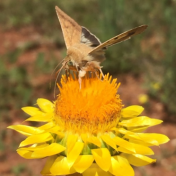
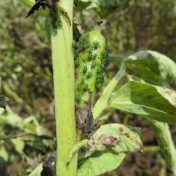
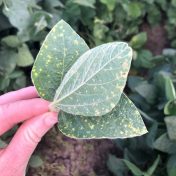
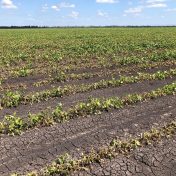
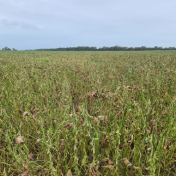
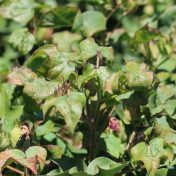
Spring has sprung, and as is typical following a wetter winter, insects are abundant in crops. There are native armyworms in winter cereals from Central Queensland to northern NSW. Aphids are abundant in winter cereals, canola and faba beans. Key drivers of pest abundance in wetter seasons are the increased availability of plant hosts over winter and into spring and… Read more »
History of FBA in Australia Faba bean aphid (FBA; Megoura crassicauda) originated from East Asia. First recorded in Australia in October 2016 in Sydney, FBA was confirmed in northwest NSW (Tamworth and Breeza) in September 2017. The aphid outbreak was controlled using Aphidex (500 g pirimicarb/kg). FBA was not observed again until 2020, where it was recorded on faba bean… Read more »
In Central Queensland, both phytoplasma and tobacco streak virus are still a common occurrence this year in mungbean crops. Phytoplasma Transmitted by leaf hoppers, the specialised bacteria of phytoplasma can cause severe disease and reduce yield and/ or affected pods in mungbean and other grain legumes like soybean, peanuts, pigeon pea and chickpea. Phytoplasma infection in mungbean and other grain… Read more »
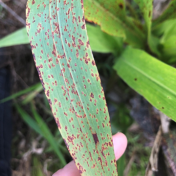
Disease surveys across northern New South Wales and southern Queensland have found that many sorghum crops have been impacted by rust. Sorghum rust is caused by the fungal pathogen, Puccinia purpurea, and is considered to be a relatively minor disease of sorghum in Australia. Symptoms Rust can infect sorghum crops at all stages of growth. Initial symptoms appear as small… Read more »
Disease surveys across southern Queensland have revealed a high incidence of Downy mildew in several soybean crops in April 2022. The downy mildew pathogen, Peronospora manshurica, infects crops during periods of rainy, humid weather. Though widespread, the disease is likely to have a minimal impact on yields. The pathogen can survive between soybean crops in infected seeds, on volunteer soybeans or alternative… Read more »
After the wet weather in recent weeks there have been several reports of powdery mildew in mungbeans across Queensland and northern New South Wales, and Fusarium wilt has been found in several southern Queensland crops. Monitor crops closely for disease symptoms, and contact our plant pathologist, Lisa Kelly at [email protected] or 0477 747 040 for further information on disease diagnosis…. Read more »
Soybean moths are on the move in the tropics with devastating populations reported in the Ingham region of NQ (see photo). Fuelling the outbreaks was a recent extreme heatwave event which saw temperatures ranging between 29-40 degrees Celsius for 12 straight days. While the heat may have made people lethargic, it greatly hastened the rate of larval development and many… Read more »
Leafhoppers (also known as jassids) rarely cause damage in cotton, so some unusual symptoms (leaf chlorosis that presented a little like cotton bunchy top disease) across several cotton fields in Queensland’s Burnett region last month that appeared to be associated with leafhoppers had both taxonomists and virologists searching for an explanation. Both the damage and leafhoppers present shared many of… Read more »
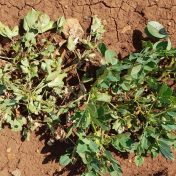
Root rot reported in Burnett peanuts The DAF pathology team has recently received peanut samples with Neocosmospora root rot from crops growing in the Burnett region. Neocosmospora root rot is a sporadic but potentially severe disease caused by the fungus Neocosmospora vasinfecta var. africana. Outbreaks have occurred previously in the Burnett region in 2005, and also in the Emerald region… Read more »
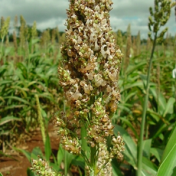
The DAF pathology team has recently received reports of ergot in sorghum panicles growing near Toowoomba in southern Queensland. Sorghum ergot is caused by the fungus Claviceps africana. The disease can result in poor seed set, lower grain quality, and can cause harvesting issues due to the sticky honeydew on sorghum panicles. Infected grain will be replaced by fungal sclerotes… Read more »