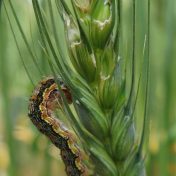
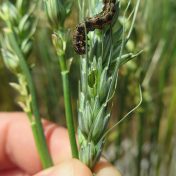
Many regions in Qld and northern NSW are still experiencing an outbreak of Helicoverpa armigera in wheat. Before the last significant outbreak occurred in 2016, it had been many years since anyone had seen such an event, and while there was a smaller outbreak in 2020, it was not on the scale or severity of this year. In many crops… Read more »
Helicoverpa outbreaks in wheat are relatively rare events. The last big outbreak, in 2016, was the first significant event for several decades, so treating helicoverpa in wheat is not something that many agronomists are familiar with. However, 2020 looks to be a year when helicoverpa infestations in some crops may warrant control. Wet winters are well correlated with outbreaks of… Read more »
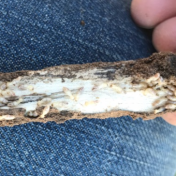
Termites are common in undisturbed parts of the landscape, playing an important role in the ecosystem. It is unusual to find them in crops—but in 2020, there have been several reports of termites in winter cereals. The first reports were received during crop establishment, and more were received once the crops started to come out in head and set grain…. Read more »
While drought has dashed the planned rotations of many growers, there is still a risk of pest outbreaks at this time of year. Below are some of the most common to keep an eye out for. A note on withholding periods following insecticide use in crops that are diverted to stock If insecticide treatments have been applied to crops which… Read more »
Armyworm infestations of barley crops, in particular, are being reported from southern NSW to the Darling Downs. Large numbers of moths are also being seen around lights at night. It is not unexpected that armyworm would be abundant this spring as some of their source areas (Channel Country, North Western Queensland) would have received significant rainfall or flows earlier in… Read more »
The spread of Russian wheat aphid (RWA) (Diuraphis noxia) in the Northern grains region is considered inevitable. When it might be detected in wheat and barley is less clear as the key drivers of its spread are not well understood in Australia. Wind is likely to play a part in moving winged aphids from south to north. The most northerly… Read more »
Large flights of helicoverpa over the last 2 weeks (or longer in some districts) have seen significant eggs lays and larval populations in winter crops, including the winter cereals. It is not unusual to find both corn earworm and armyworm in cereal crops. Correct identification of the species present is very important as it influences damage potential and choice of… Read more »
Key points Conditions suitable for the usual cereal aphid species will also be suitable for RWA. Aphid populations typically build rapidly in late July and August. Do not assume aphids in cereals are just the usual oat and corn aphid. In the event of a Russian wheat aphid (RWA) infestation, early detection in spring is critical to prevent yield loss…. Read more »
The South Australian government are currently responding to detections of Russian wheat aphid (Diuraphis noxia), which was initially found on a property in Tarlee in South Australia on 13 May 2106. Since the first detection, Russian wheat aphid has been found on a further 22 properties within 1,400 square kilometres, and the number is expected to rise. Investigations are underway… Read more »
Call Biosecurity Queensland on 13 25 23 if you see this pest Russian wheat aphid (Diuraphis noxia) has been found on over 1,400 square kilometres of land in the mid-north of South Australia. Russian wheat aphid is a major pest of cereal crops which injects toxins into the plant during feeding, retarding growth and killing the plant. Russian wheat aphid… Read more »